“Taste and see that the LORD is good. How happy is the person who takes refuge in him!” (Psalm 34:8, CSB).
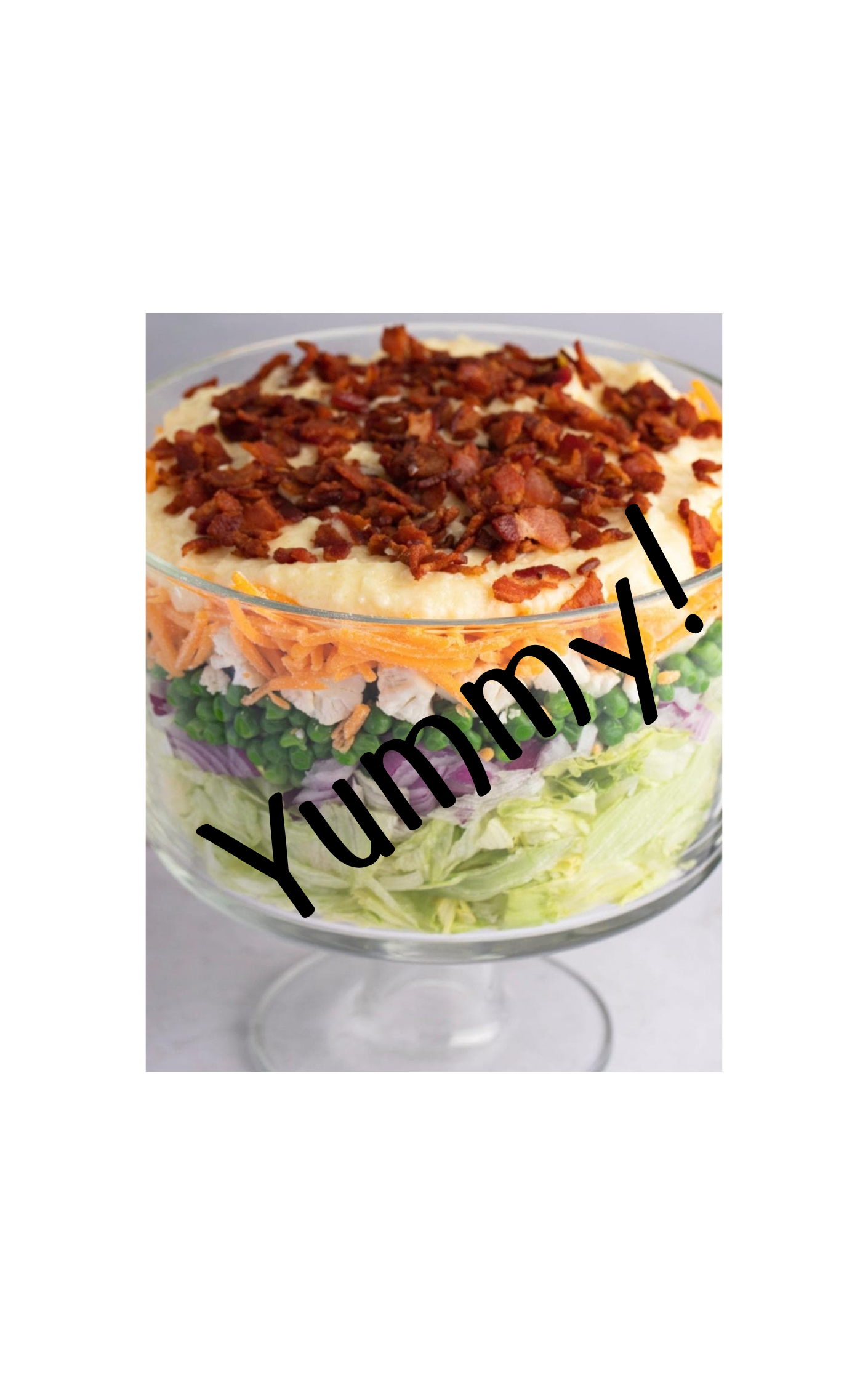
That’s an invitation and a challenge to trust the Lord with our lives and livelihoods. But the verse causes me to think of peas. A little butter, and I like them hot, but we’re having a 7 – 9 layer salad for supper tonight. Start with the iceberg lettuce. Add the celery, red onion, shredded cheddar and chopped cauliflower and mayonnaise based dressing. Add the crispy (but not overcooked) bacon and frozen peas last. It’s prettier that way. Yum!
It was a 7 layer salad that converted me from pea hater to pea lover. I remember how peas elicited my gag reflex from the time I was about five until sometime in my early twenties. Had you asked me to eat peas when I was seven years old, or to taste even a spoonful, you would have either given up or faced a battle of wills and lost. Had you persisted long enough or tried to force me, you might have been spat upon.
The story of my conversion: I scooped up the two spoonfuls of salad from a potluck line. Being the first to take from the dish, of course I noticed the bacon and cheddar cheese. The bright green peas, however, hadn’t caught my eye. When I saw the first one, I didn’t want to appear rude or uncouth, so I used my fork to maneuver it to the edge of my plate.
Then I saw another and another and another. Enjoying that salad soon became work, and the other women were beginning to notice. A pea fell from my fork with the next bite. Good. One less. I took the next bite almost as if suffering for a cause. Whoa. I didn’t gag. Another bite, peas and all, and another. This is good.
It wasn’t the peas alone that made the salad tasty and memorable for me. It was the combination, but I almost let the sight of a few tiny peas rob me. Decades after my twenties, I still love a 7-layer salad. (Hint: Dry the lettuce and don’t use too much mayonnaise. Otherwise, it gets soggy.) I’m writing about this today to show what a milestone this was for me.
I was excited to tell my mother, “I actually like peas now!”
Peas were never ugly. That was not my complaint. Any child can see they are a beautiful shade of green—and lovelier than a green been or celery or spinach. After talking with friends who were once seven, it might have been a texture thing, and while I can’t be sure, most of us had experienced some lukewarm peas along the way. Those little things fall to room temp within a few minutes of being dropped on a cool, dinner plate. Yuck. Either hot or cold! Essential. I could cite another Bible verse that brings peas to mind, but not right here. Not today, but does anyone else suspect that Jesus might have tasted lukewarm peas?
A few facts about peas:
- Peas are high in fiber.
- Peas are a great source of plant-based protein.
- Peas contain natural sugar, but are filling, making then a good diet food.
- Scientists have said that the balance of protein, fiber and sugar in peas is perfect. Plus, peas contain just about every other vitamin and mineral we need for daily health.
- Telling a child to eat their vegetables and then putting peas on their plate, is technically deceitful. Peas are actually a legume, a bean. Oh that my mother would have told me they were candy and served them from the freezer.
If it seems like I’m singing the praises of this amazing God-created food, I’m not. I’m singing the praises of the God who gifted them to us!
But here’s the thing: I can read about the nutritional value of peas in science books or watch the videos and learn the facts. I can study physiology and nutrition until I’ve earned a PhD. I can teach others and tell others to eat their peas. I can cultivate, even grow peas and teach farmers to grow peas. I can buy peas—in the produce section, the frozen food section or canned food aisle. OH! And I can do observational research from my kitchen at home, testing what recipes work best for my family and what pea recipe is certain to pass the church potluck test. Yet, if I only serve peas, and don’t eat them, will they give me nourishment?
(Check out 1 Corinthians 13 for the answer to that question.)
But the palmist isn’t talking about peas. He is telling us to prove something … more accurately, to let the Lord prove something. So, what does the psalmist mean by “taste?”
The answer to that question is clear when we read Chapter 34 in its entirety. The psalmist tells us that the Lord observes the evildoer and the righteous one. He encourages us to bless the Lord, to always have praise on our lips, to boast in the Lord, to be humble and glad. He tells us to seek the Lord when we are afraid, and that He is our rescuer.
The Lord isn’t lying, and the psalmist isn’t telling us to swallow anything hook, line and sinker. He’s telling us to trust and taste—and he’s reminding us that the Lord is good and true to His promises. But we’ve got to taste before we can see.
Got any good recipes that include peas? I don’t know about you, but I need to be eating more peas.
A 7 (maybe 9) layer salad, heavy on the bacon, cheese and peas, makes a pass the tongs and loosen the belt buckle good meal. Have you tried adding pecans? I’m out of mayonnaise, but it’s worth an extra trip to the grocery store.
Almost makes me want to like peas. I will eat them in a soup or salad, but never as a side dish. Can’t stand the texture or smell when they’re cooked. Love the riff on the love chapter. No pun intended.